New Year, New Habits

breadcrumb breadcrumb

New Year, New Habits

January often feels like a natural moment to pause and reflect, with many considering it a time for resolutions or change. Many people choose to stop drinking completely at this time of year, while others prefer to cut down or simply take a gentler approach. However, if you want to move forward, this page is here to help you think about your relationship with alcohol and give you the tools to stay informed, safe and in control. You can use the tips in whatever way suits you best and follow them at your own pace.

Barnsley Recovery Steps is a free local service that supports people who want to make changes to their use of alcohol or other drugs. Whether you want to cut down, reflect on your drinking, or stop altogether, we can support you in a way that works for you and always without judgement.
JanuaryIntroImage
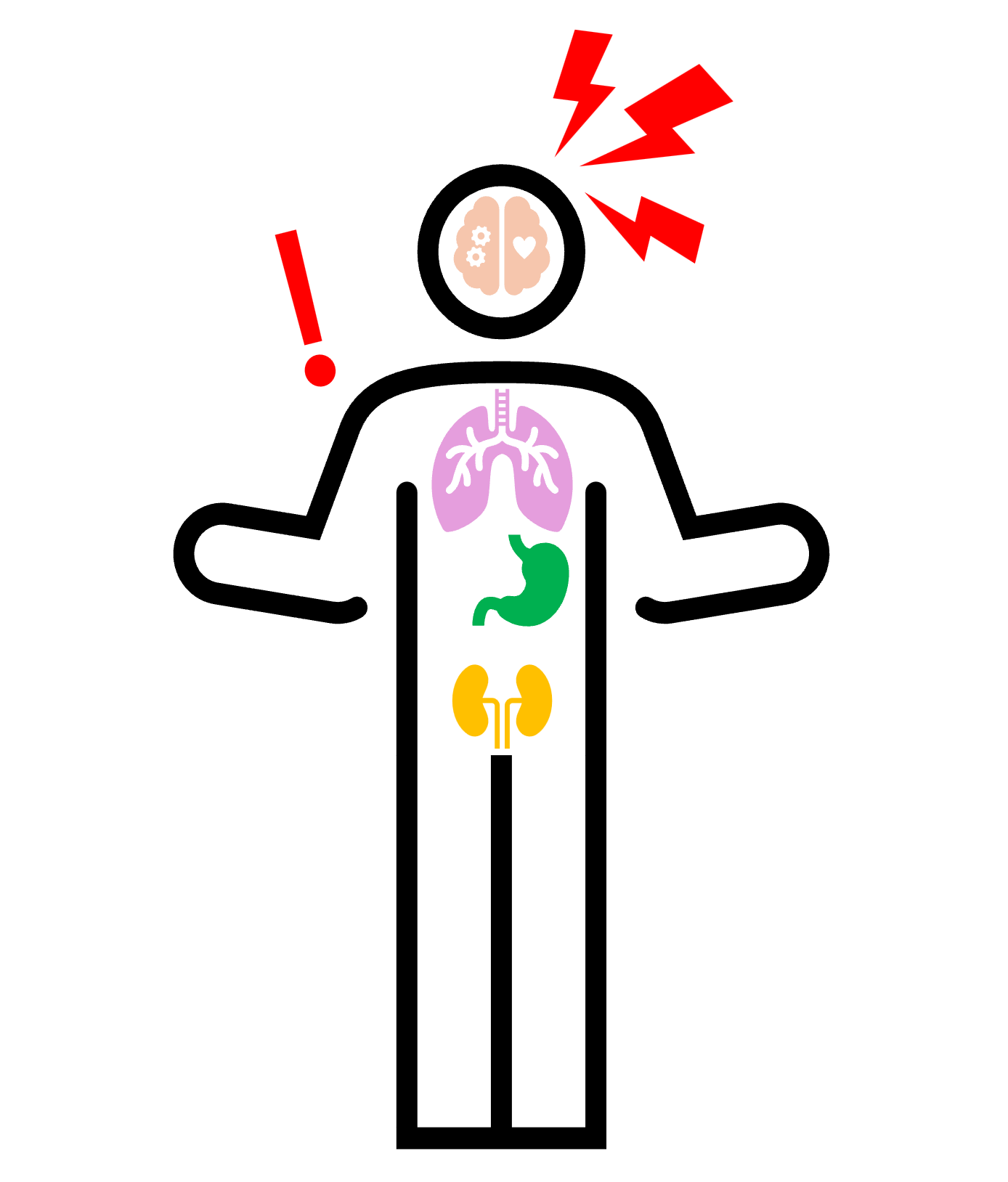
HumanBodyAlcohol

How Does Drinking Affect Your Body?

Drinking alcohol can have various affects on the body that can lead to undesirable changes in behaviour or thinking. Some of these affects have been listed below:

  • Brain & Speech: after only an hour of drinking, your judgement and concentration will be impaired. Equally, you will notice slurred speech after about an hour. This can lead to making decisions that may be later regretted.
  • Mental health: drinking can cause mood swings, ranging from irritability and violence to depression and anxiety.
  • Liver: excessive alcohol consumption leads to various forms of liver damage such as alcoholic fatty liver disease.
  • Stomach: drinking can cause mild gastric symptoms such as heartburn, as well as serious conditions such as gastroenteritis.
  • Kidneys: as alcohol is a diuretic, it causes water to be lost from the body via the kidneys, aka urine. The kidney’s filtering abilities are decreased.
  • Pancreas: drinking can lead to low blood sugar, resulting in dizziness, and long term damage such as pancreatitis.
  • Lungs: when drinking, your chances of developing pneumonia are increased.

Alcohol Consumption & Risky Behaviour

The Alcohol Use Disorders Identification Test (AUDIT) defines ‘high risk’ drinking as ‘the level of drinking [that] has the greatest risk of health problems’.

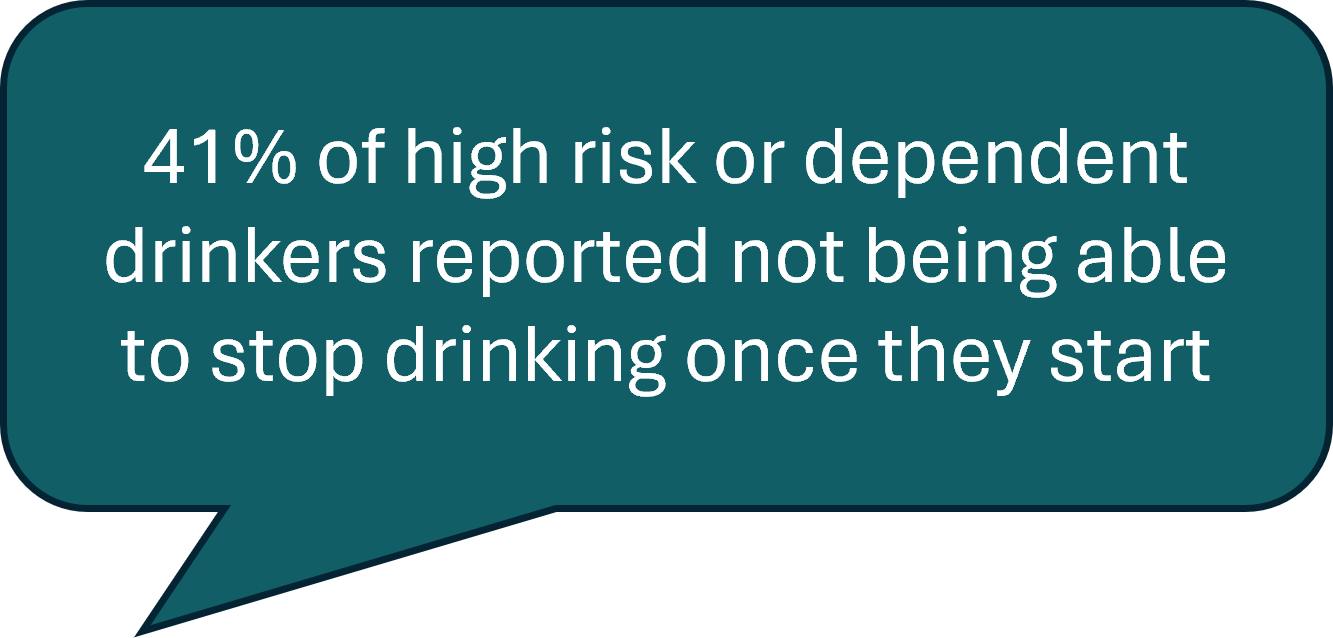
DrinkAware research has found that two in five high risk drinkers find they are not able to stop drinking once they start at least weekly, 10x higher than all drinkers.


41PercetageOfRisk
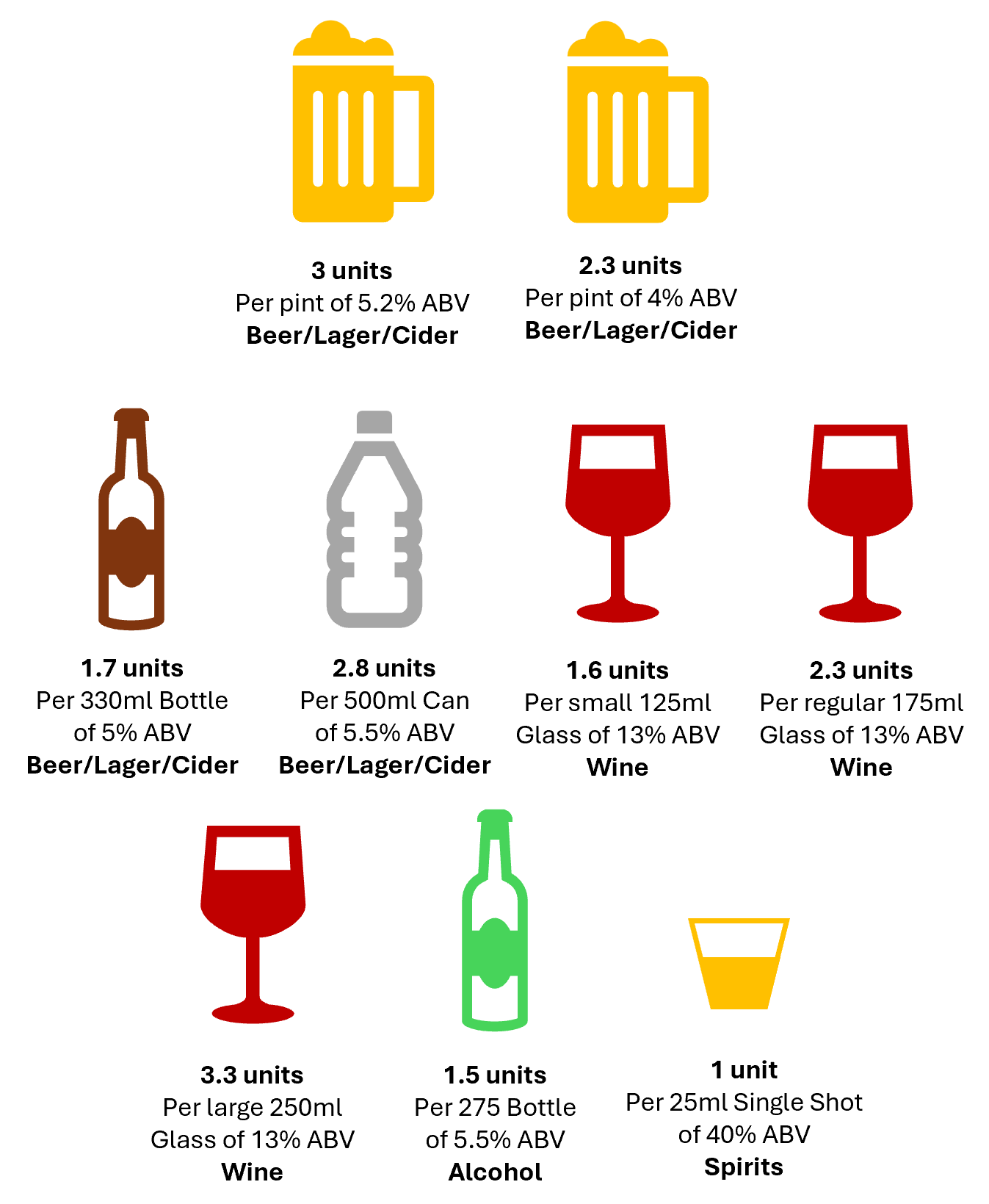
AlcoholUnitsGraphicReducedVersion

NICE Guidelines

Alcohol misuse is when you drink in a way that’s harmful, or when you’re dependent on alcohol. To keep health risks from alcohol to a low level, both men and women are advised not to regularly drink more than 14 units a week.

A unit of alcohol is 8g or 10ml of pure alcohol, which is about:

  • Half a pint of lower to normal-strength lager/beer/cider (ABV 3.6%)
  • A single small shot measure (25ml) of spirits (25ml, ABV 40%)
  • A small glass (125ml, ABV 12%) of wine contains about 1.5 units of alcohol.

Why Do Peoples Sometimes Drink More Than They Should?

  • To cope with stress, anxiety or low mood
  • Out of habit or routine – like always having a drink after work
  • Social pressure – feeling like you have to keep up with others
  • Boredom or loneliness
  • To unwind or relax after a long day
  • As a reward – “I’ve earned this” thinking
  • Because it’s expected – at events, family gatherings or nights out
  • Not noticing how much you’re drinking – large glasses, topping up, or drinking quickly
  • To boost confidence or feel more sociable.

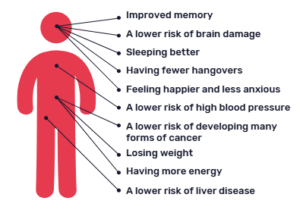
The Benefits Of Drinking Less

Reducing or stopping drinking can have a big impact on your health and wellbeing. You might sleep better, feel less anxious, have more energy, and even lose weight. Over time, drinking less also lowers your risk of serious health conditions like high blood pressure, liver disease, and several types of cancer.

Even small changes can make a real difference.
Tips To Help You Drink Less

You Could Swap Your Drink For…

  • Alcohol-free version – same taste, no alcohol – no hangover
  • Wine Spritzer – half wine, half soda water to reduce units
  • Spirit and mixer but single measure with more mixer – less alcohol, same flavour
  • Alcohol-free alternative – try alcohol-free beer, wine, or a grown-up soft drink like kombucha or tonic with fresh lime
  • Alcohol-free round – alternate between alcoholic and non-alcoholic drinks
  • Nightcap swap for a herbal tea or hot chocolate – Helps you unwind without disturbing your sleep
  • Lower-strength drinks – look for drinks under 4% ABV to reduce your alcohol intake.

Having a Drink? Make A Plan…

  • Make a budget
  • Have soft drinks or water in-between alcoholic drinks
  • Eat before drinking
  • Start drinking later
  • Stop drinking earlier
  • Take your time over your drinks.

Drinking To Relax? Try This Instead…

  • Go for a walk or exercise – it will boost your mood
  • Try a hot bath or shower – helps relax your mind and muscles
  • Listen to music or a podcast – something to help you switch off
  • Breathe it out – try a short mindfulness video on YouTube
  • Talk it out with a friend – someone you trust deeply
  • Try a hot drink instead – herbal tea or warm milk can help you unwind without affecting your sleep.
SwapPlanChangeDiagram
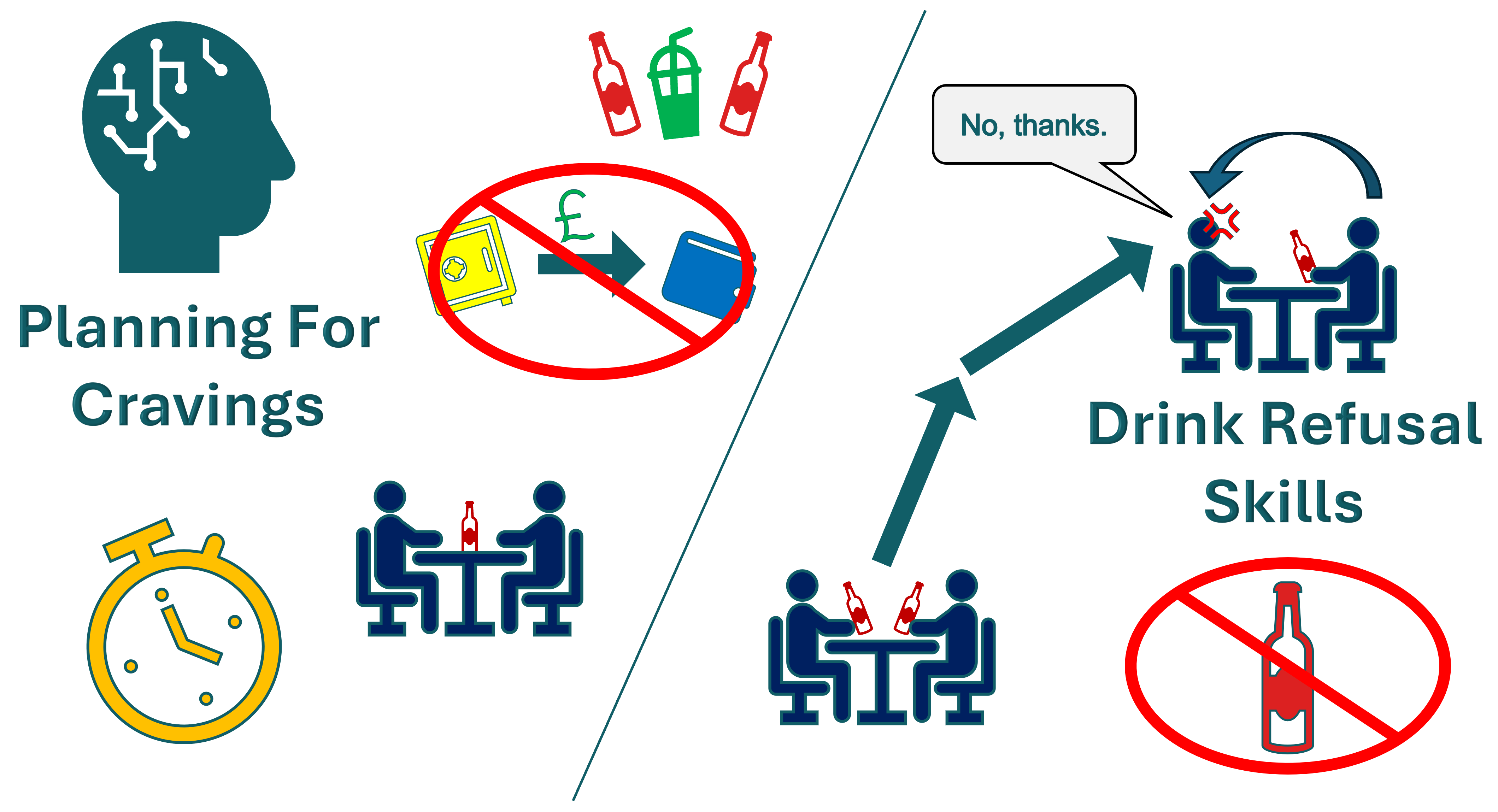
CravingsPlanningAndDrinkRefusalAnnotation

Planning For Cravings

When cravings show up, having a plan helps you stay in control. Techniques like urge surfing, using grounding or imagery, and distracting yourself can make cravings easier to ride out.

If you’re drinking but want to stick to safer limits small changes can help you keep progress going over Christmas:

  • Alternate alcoholic drinks with alcohol-free options
  • Only take a set amount of money
  • Avoid buying rounds
  • Set a personal limit
  • Pace yourself.

Drink Refusal Skills

Social pressure to drink can be strong. It can come in two ways:

  • Direct pressure: Someone offers you a drink or encourages you to have one.
  • Indirect pressure: You feel tempted just by being around people who are drinking.

To manage this:

  • Avoid high-pressure situations when you can
  • Plan how you’ll cope in the ones you can’t avoid
  • Say “no” clearly and confidently
  • Keep it friendly but firm
  • Avoid long explanations that invite more pressure.

People may not realise you’re cutting down, so persistence can vary. Start with a simple refusal and move to more assertive responses if needed.

Not Sure What Your Drinking Means?

That’s okay. We’re here to help!

If you want to check your drinking at home, the AUDIT-C Questionnaire is right below this, so feel free to answer it and see where you’re at before taking any next steps. Here’s some more information and advice regarding the questionnaire:

What do the scores mean?

  • Score of 8–19: This suggests your drinking could be putting your health at risk. You may benefit from extra support to cut down or explore your relationship with alcohol. You can work with DrinkCoach, an online service for people in Barnsley. Alternatively, if you’d rather speak to someone in person, by phone or video, you can choose to get support from Barnsley Recovery Steps instead.
  • Score of 20 or more: You’ll be offered support through Barnsley Recovery Steps, who are here to help anyone wanting to make a change, whatever their situation. This category also applies to you if you have signs of physical dependency, such as needing a drink in the morning to feel normal.

You’ve got choices

It’s your journey, and you get to choose what support feels right for you. If you score between 8 and 19, and you’d rather talk to someone face to face or by phone, Barnsley Recovery Steps is here for you too, you will find our contact details at the end of the page if you wish to contact us.


Barnsley Recovery Steps

Alcohol Support

Barnsley Recovery Steps offers free, confidential support for people of all ages in Barnsley who want to reduce or stop their alcohol use, or simply reflect on their relationship with drinking.

Our friendly team can support you with:

  • One-to-one alcohol support and advice
  • Group sessions focused on alcohol recovery
  • Help with managing cravings and withdrawal
  • Harm reduction information
  • Support for families and those affected by someone else’s drinking

How to contact us:

Where we are:

  • 5–6 Burleigh Court, Burleigh Street, Barnsley, S70 1XY
  • The Recovery Hub, McLintocks Building, Crookes Street, Barnsley, S70 6BX
  • Satellite Hub, Dearne Enterprise Centre, Bamburgh Lane, Goldthorpe, S63 9PG
Rectangle 4638